
Flat & Low-Slope Roof Replacement in Sarasota, FL
Low-slope roofs need a replacement plan built around water movement and membrane detailing.
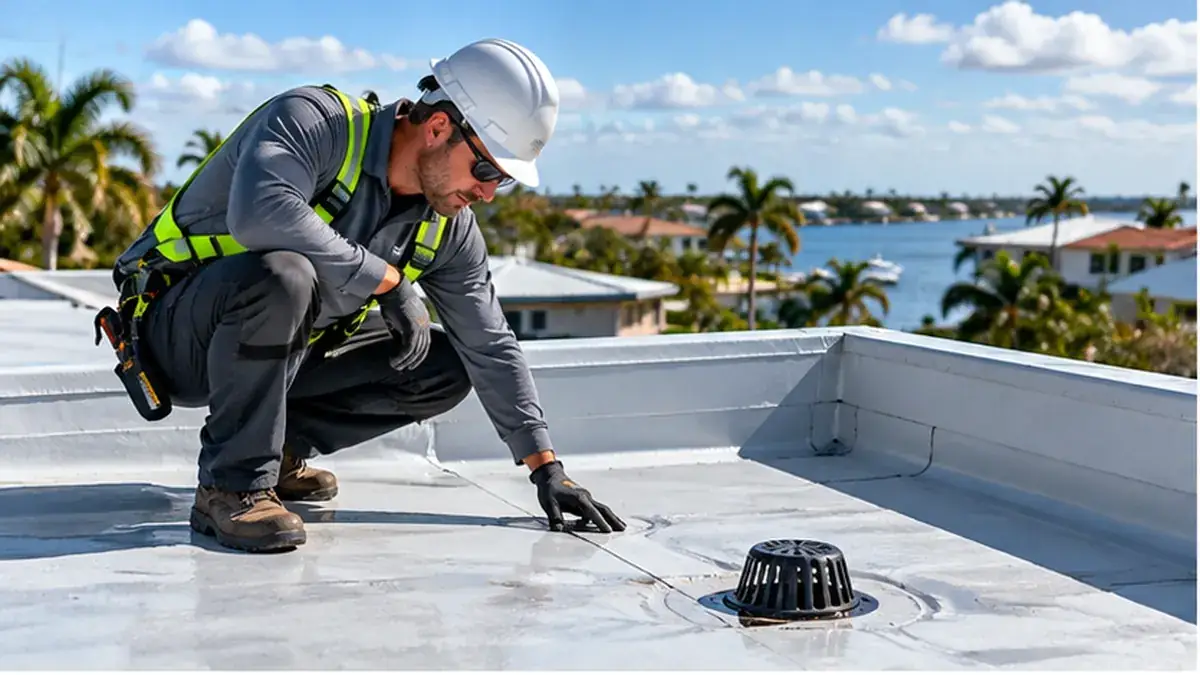
What makes low-slope replacement different?
Water drains more slowly, so laps, penetrations, drains, scuppers, edge details and substrate condition play a larger role. The system must match the roof slope and drainage design.
What problems can hide below a membrane?
Trapped moisture, wet insulation, deteriorated deck areas and failed flashings may not be obvious from the surface. Moisture investigation can change the replacement scope significantly.
What roof systems may be considered?
Depending on the building and slope, contractors may discuss single-ply membranes or modified bitumen systems. The right specification depends on the substrate, use, drainage and local requirements.
Why ponding water needs diagnosis
Standing water can indicate drainage or slope issues. Replacing the membrane without correcting the cause can leave the same performance problem in place.
Common questions
Can a flat roof be repaired instead of replaced?
Yes, when damage is isolated and the surrounding membrane is serviceable. Widespread deterioration or moisture can change the decision.
Is a low-slope roof the same as a flat roof?
Many roofs called flat actually have a small slope for drainage. Product requirements depend on the actual slope.
Should insulation be replaced during reroofing?
Only after condition and moisture are evaluated. Wet or damaged insulation may require removal, while sound insulation may be handled differently by the scope.
Discuss this roof replacement need
For a flat or low-slope roof, share the membrane type if known, where water collects, and whether leaks occur near drains, edges or penetrations. An on-site assessment can confirm whether localized work or replacement is appropriate.
Request roof help Roof inspection
 Replacement cost factors
 Storm damage