
Emergency Roof Repair
Start here when active water entry needs immediate attention.
Hurricane and tropical-storm damage can range from a few displaced roof materials to widespread wind, water or impact damage. The next step depends on what failed, how much of the roof is affected and whether waterproofing and decking remain serviceable.
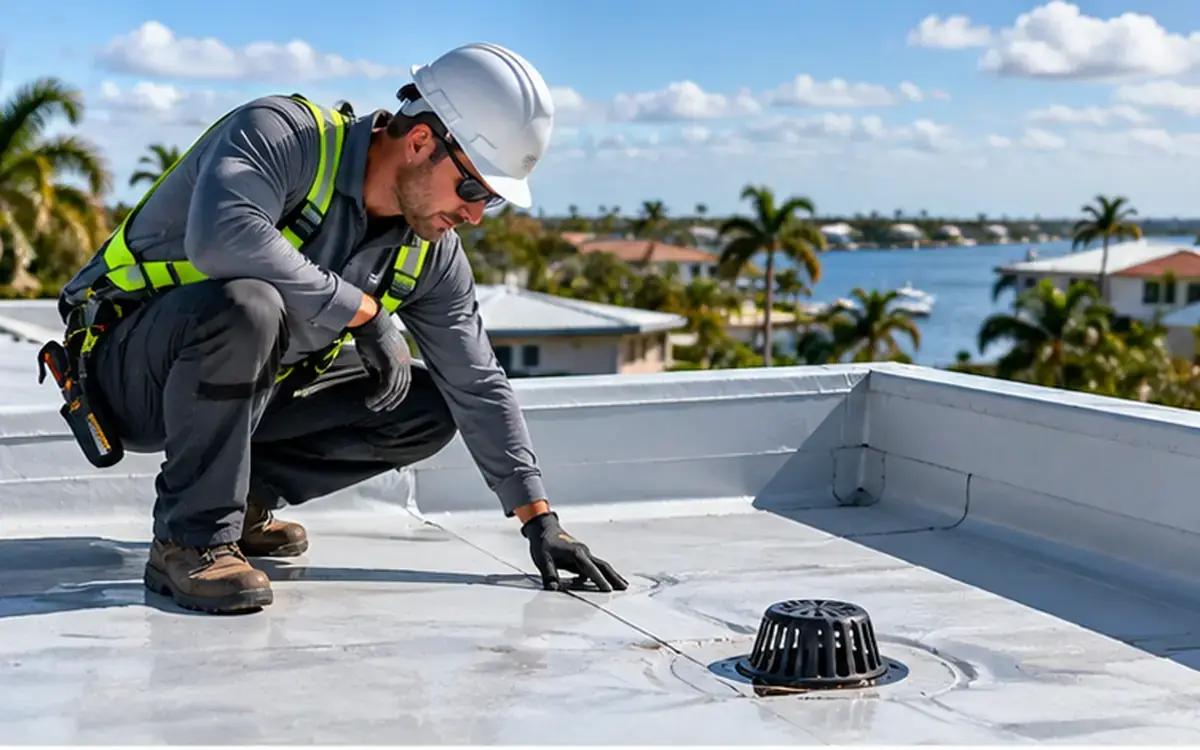
Visible signs can include missing or creased shingles, displaced tile, damaged ridge or hip components, punctures from debris, loose flashing and damaged roof edges. Less obvious problems can include lifted materials and water entry during wind-driven rain.
Wait until conditions are safe. Photograph visible exterior and interior damage from the ground or inside the home, note where water entered and avoid walking on the roof. For active water entry, see emergency roof repair.
Localized storm damage may be repairable. Broader damage, repeated leaks, widespread underlayment failure or deck damage can change the decision. A roof inspection should define the extent first.
Tile roofs may show broken or displaced pieces while waterproofing details also need review. Shingle roofs can lose tabs, develop lifted seals or show creases that are not obvious from the ground.
Replacement may be considered when damage affects multiple roof planes, the deck or waterproofing system has broader problems, or repairs cannot restore a dependable assembly. See storm-damage roof replacement.
Repair and replacement requirements depend on the property jurisdiction and work scope. Keep inspection notes, photographs and written proposals. See the Sarasota roof permit guide for local context.
Describe visible storm damage and any indoor water entry. A post-storm inspection can then separate urgent protection from the final repair or replacement scope.
A post-storm check should separate visible surface damage from problems that can let water into the roof system. The result should point to repair, temporary protection or a replacement assessment.
Stopping active water entry comes first. The repair or replacement decision should follow after the roof can be inspected safely and the full damage pattern is known.
Storm damage can appear at edges, ridges, flashing and roof openings as well as in the middle of a roof slope. A post-storm inspection should look for both missing material and details that were loosened or opened by wind.
Check only from safe ground-level or interior locations after conditions have cleared.
No. A small isolated area may be repairable, but the surrounding roof should be checked for other wind damage.
Localized broken or displaced tile may be repairable when underlayment and surrounding materials remain serviceable.
Replacement becomes more likely when damage is widespread or the waterproofing system or deck is compromised.
If you are still comparing options, continue with emergency roof repair, storm-damage replacement, or review roof inspection for the next part of the decision.
Describe the visible damage, any interior water entry and when the storm occurred.