
Tile Roof Replacement in Sarasota, FL
If a tile roof has repeated leaks, widespread broken tiles, deteriorated underlayment or storm-related damage, a replacement assessment can show whether targeted repair still makes sense or the full roofing system needs attention.
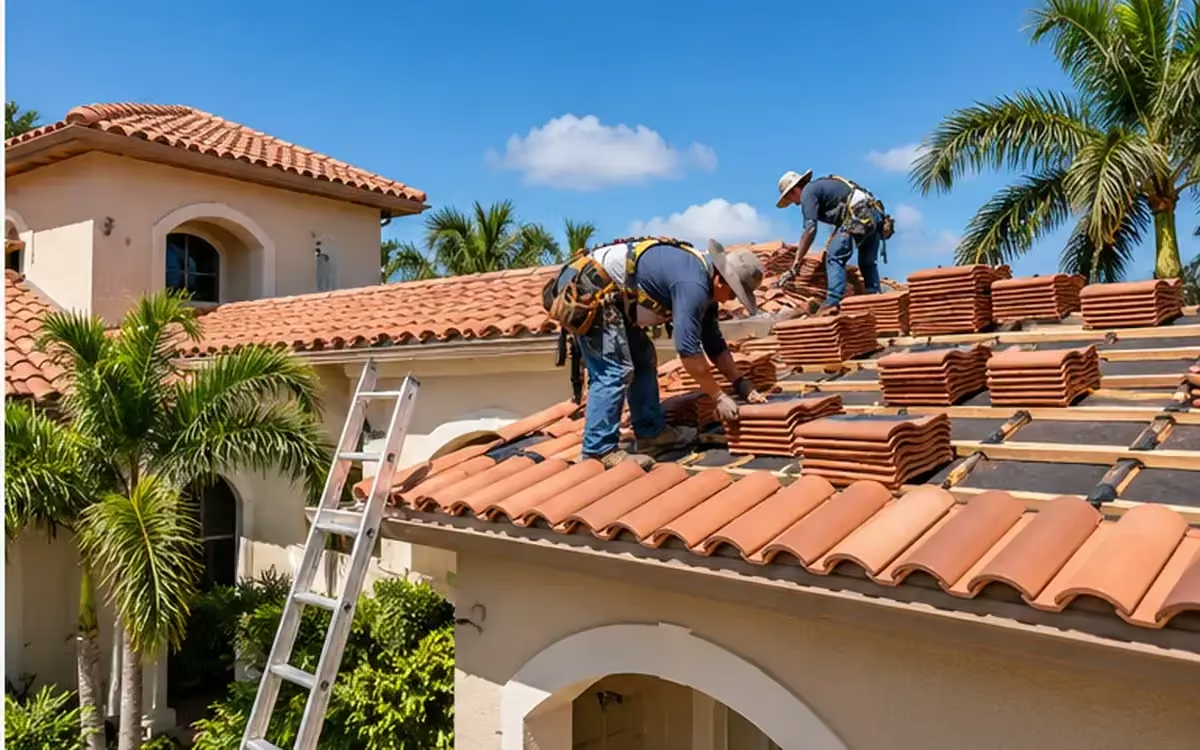
Why Sarasota homeowners replace tile roofs
Tile can remain visually attractive even when the water-shedding layers below it are aging. In Sarasota, strong sun, heat, humidity, heavy rain, wind-driven rain and tropical weather can expose weak points around underlayment, flashing, valleys and roof penetrations. The condition of the whole system matters more than the appearance of one roof plane.
Common reasons homeowners request a replacement assessment include repeated leaks in different areas, extensive cracked or displaced tile, deteriorated underlayment, storm damage, damaged roof decking, difficult-to-match older tile profiles, or a reroof that has reached the point where repeated spot repairs no longer solve the underlying problem.
Signs your tile roof may need a replacement assessment
Water is showing up in more than one area
Recurring stains, damp decking or leaks at several transitions can indicate a broader waterproofing problem. The source still needs to be traced before deciding between repair and replacement.
Tiles are repeatedly cracking, slipping or breaking
One damaged tile may be a repair. Repeated failures across several roof planes can point to age, attachment problems, foot traffic, storm effects or system-wide wear.
Underlayment is deteriorating
Underlayment provides an important secondary water barrier below tile. Its condition can matter more than how the tile looks from the ground. For the separate water-control layer beneath the roof covering, see the Florida roof underlayment guide.
Decking or flashing shows moisture damage
Soft decking, staining, corrosion or failed flashing can point to that water has moved beyond the outer tile layer and needs an inspection before a new roof system is specified.
A visual symptom does not diagnose the entire roof. An inspection should determine where the problem starts, how far it extends and whether a limited repair can reasonably correct it.
Not sure whether the roof needs repair or replacement?
Start with the condition of the waterproofing system, the extent of damage and the history of previous repairs. A replacement decision should follow the evidence, not one broken tile.
Schedule a Roof InspectionTile roof repair vs. replacement
Repair can be reasonable when the problem is isolated, compatible replacement tile is available, the underlayment remains serviceable and there is no pattern of recurring water intrusion. A localized flashing repair or a small number of broken tiles should not automatically become a full reroof.
Replacement deserves stronger consideration when problems appear across multiple roof sections, the underlayment has widespread deterioration, repeated repairs are failing, decking damage is present, or the existing tile and attachment system make ongoing repairs difficult. The dedicated roof repair vs. replacement guide explains the broader decision without duplicating the tile-specific details on this page.
Clay tile and concrete tile options
| Factor | Clay tile | Concrete tile |
|---|---|---|
| Appearance | Often selected for traditional profiles and color characteristics. | Available in many profiles, textures and finishes. |
| Weight | System weight must be matched to the structure and selected product. | Also requires confirmation that the structure and deck suit the chosen system. |
| Replacement matching | Older profiles or colors may be difficult to match. | Availability varies by profile, manufacturer and age of the existing roof. |
| Selection decision | The right choice depends on roof structure, profile, attachment, availability, appearance, budget and the complete installation specification. Neither material is automatically best for every Sarasota home. | |
When comparing tile systems, ask for the complete assembly rather than focusing only on the visible tile. Underlayment, flashing details, fastening or approved attachment methods, ventilation where applicable, valleys and roof-edge details all affect performance.
What happens during a tile roof replacement?
- Initial discussion: explain the roof type, known leaks, storm history, previous repairs and the reason you are considering replacement.
- Roof inspection: the visible tile, flashing, penetrations, valleys, roof edges and accessible interior or attic areas are reviewed.
- Condition assessment: the contractor determines whether the problem is isolated or whether underlayment, decking or other system components show broader deterioration.
- Scope and material selection: clay or concrete tile, profile, color, underlayment and related details are selected for the property.
- Written estimate: the proposal should describe removal, disposal, decking allowances, waterproofing components, flashing, tile installation, cleanup and any known exclusions.
- Scheduling and preparation: delivery, access, protection of landscaping and work-area setup are planned before tear-off.
- Removal and deck review: existing materials are removed as required so concealed deck or moisture damage can be evaluated.
- Waterproofing and detail work: underlayment, flashing, valleys, penetrations and edge details are completed as specified.
- Tile installation: the selected tile system is installed using the approved method for that roof and product.
- Cleanup and final review: debris is removed and the completed work is reviewed. Required inspections or permit closeout should follow the authority responsible for the property.
What Sarasota conditions matter for tile roofing?
Sarasota's climate makes water management and wind exposure important parts of a tile-roof discussion. Strong sun and heat affect roofing materials over time. Humidity and heavy rain make dependable underlayment, flashing and drainage details important. Tropical storms and hurricanes can also create wind-driven rain, displaced tile and damage at ridges, edges and penetrations.
That does not mean every Sarasota tile roof needs a special or identical solution. Roof geometry, distance from the coast, tree exposure, prior work, deck condition and the specific tile system can change the scope. Current permitting and inspection requirements should be confirmed for the property's jurisdiction before work begins. See the Sarasota roof replacement permit guide for the site's local permitting overview.
What affects tile roof replacement cost?
A responsible estimate needs the property-specific scope. Exact Sarasota pricing should not be guessed from a generic square-foot figure. This is because two roofs with similar floor plans can require very different amounts of tear-off, deck work, flashing and labor.
Roof size and geometry
Total roof area, pitch, hips, valleys, dormers and complex transitions affect material quantities and labor.
Tile type and availability
Clay, concrete, profile, finish, special-order materials and matching requirements can change the scope.
Existing roof condition
Tear-off, deteriorated underlayment, damaged decking and previous repairs can add work that is not visible from the ground.
Access and detail work
Height, staging, landscaping, flashing, penetrations, waste handling and required inspections can all affect the estimate.
For a fuller breakdown of estimate variables, see roof replacement cost factors in Sarasota.
How long can a tile roof replacement take?
There is no responsible single timeline for every property. Roof size, pitch, complexity, tear-off, concealed deck damage, tile availability, weather, crew scheduling and required inspections can all affect duration. A written proposal should explain the expected sequence and how unexpected deck or structural findings will be handled if they appear after removal begins.
How to compare tile roofing contractors
Homeowners should compare more than a headline price. Ask each contractor to explain the same scope so proposals can be compared fairly.
- Confirm the contractor meets current Florida and local licensing requirements applicable to the work.
- Ask for current insurance information and verify it rather than relying on a logo or verbal statement.
- Look for documented experience with clay or concrete tile systems similar to the roof being replaced.
- Request a written scope covering tear-off, underlayment, flashing, decking, tile, cleanup and change-order handling.
- Ask which materials and installation system are being proposed and why they fit the property.
- Review payment terms, warranty documents and who is responsible for permits and inspections.
- Check recent references or reviews for the actual contractor performing the work.
- Pay attention to communication: questions about hidden damage, scheduling and changes should have clear answers.
Sarasota Roof Replacement Co does not claim contractor credentials that have not been verified. Confirm the credentials of the provider who will actually perform the work before signing a contract.
Understanding tile roof warranties
Roofing warranties can cover different things, so the term "warranty" by itself is not enough. A manufacturer warranty may apply to eligible roofing materials under stated conditions. A contractor workmanship warranty addresses installation work under that contractor's written terms. Individual components can also have their own product warranties.
Ask for the actual written documents before the project begins. Check duration, exclusions, transfer rules, maintenance obligations and whether registration is required. Do not assume one warranty covers every component or every cause of damage.
Aftercare for a replacement tile roof
Routine observation can help catch problems before they spread. After major storms, look from the ground for displaced or broken tile and watch ceilings or attic areas for signs of moisture. Keep gutters and drainage paths functioning where they are part of the property. Have flashing or penetrations evaluated if staining appears nearby.
Avoid walking on the roof unless you are trained and equipped to do so. Tile can crack under improper foot traffic, and working at height creates a serious fall risk. Use a qualified professional for close inspection and repair work.
Ready to discuss a tile roof replacement?
Have the roof type, known leak locations, recent storm damage and previous repair history available. That makes the first conversation more useful and helps decide whether the next step should be an inspection or replacement estimate.
Tile roof replacement FAQs
How much does tile roof replacement cost in Sarasota?
Cost depends on roof size, pitch, tile type, tear-off, underlayment, deck condition, flashing, access, disposal and the final project scope. A property inspection is needed for a meaningful estimate. The roof replacement cost guide explains the main variables.
How long does tile roof replacement take?
Duration varies with roof area, complexity, weather, material availability, tear-off, hidden deck repairs and inspection scheduling. Ask the contractor for a project sequence based on your actual roof rather than relying on a generic number of days.
Can a few broken roof tiles be repaired instead of replacing the roof?
Often, yes. Isolated damage may be repairable when compatible tile is available and the underlayment and surrounding roof system remain serviceable. Repeated damage or widespread waterproofing failure can change that decision.
Is clay tile better than concrete tile in Sarasota?
Neither material is universally better. The right choice depends on the structure, roof design, product profile, attachment system, appearance, availability, budget and complete installation specification.
How long can a tile roof last in Florida?
Service life varies by tile system, underlayment, installation quality, maintenance, exposure and previous damage. The visible tile may outlast waterproofing components below it, so roof condition should not be judged by tile appearance alone.
Can hurricane or wind damage require tile roof replacement?
Storm damage can range from a few displaced tiles to broader failures involving underlayment, flashing, ridges or decking. Replacement should be based on the extent of confirmed damage, not the fact that a storm occurred.
What should a tile roof inspection include?
It should review tile condition, ridges and hips, flashing, penetrations, valleys, roof edges, visible attachment issues, signs of water intrusion and accessible deck or interior conditions. See the roof inspection page for more detail.
What should I ask a tile roofing contractor before hiring?
Ask about current licensing and insurance, tile-roof experience, the written scope, underlayment and flashing details, proposed materials, permits, payment terms, cleanup, warranties and how unexpected deck damage will be handled.
What is the difference between a material warranty and workmanship warranty?
Material warranties come from the product manufacturer and apply under their written conditions. A workmanship warranty comes from the installer and covers installation according to that contractor's terms. Read both documents rather than assuming they provide the same protection.
Do I need an inspection before requesting a tile roof estimate?
A contractor generally needs to evaluate the roof before providing a reliable replacement scope. If you are unsure whether replacement is necessary, a replacement-focused inspection can help clarify whether repair remains reasonable.