
Shingle Roof Replacement
Compare replacement when wear or damage extends across the roof.
Shingle roof repair addresses localized damage such as missing tabs, lifted edges, impact damage, flashing failures and limited leak areas. The surrounding roof still needs enough useful life for a repair to make sense.
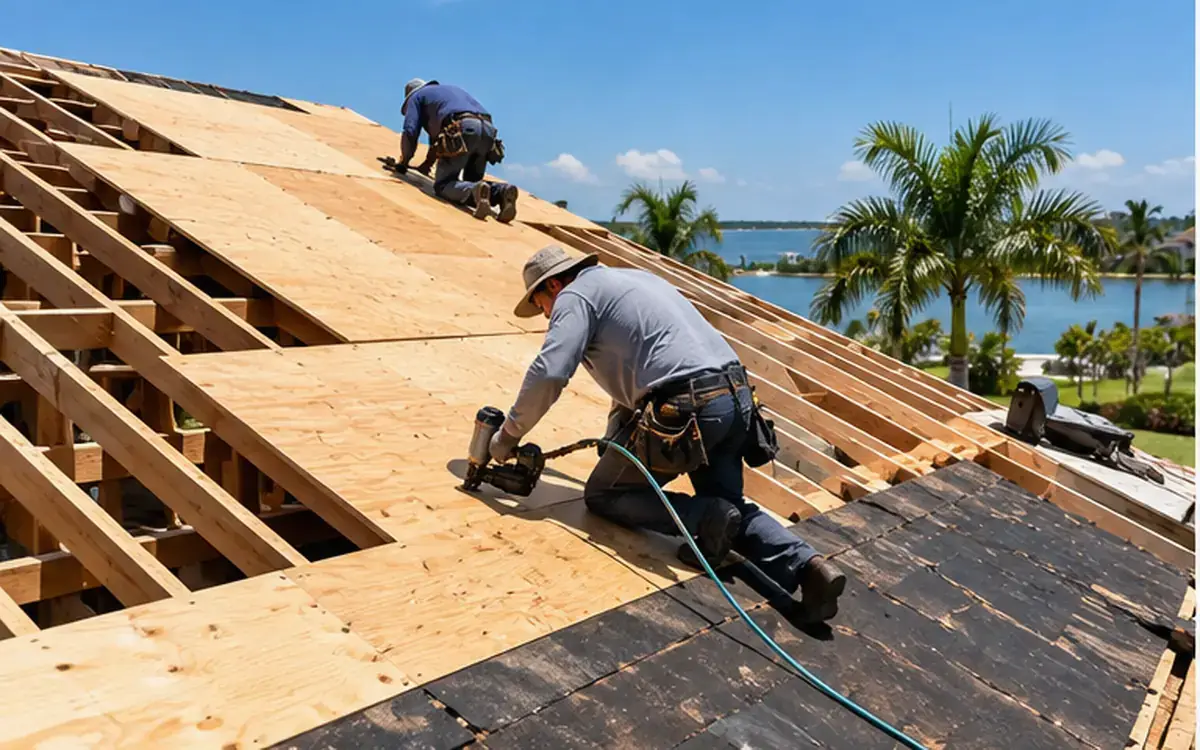
Repair calls often involve missing shingles after wind, lifted edges, damaged ridge caps, impact damage, exposed fasteners, flashing defects and leaks around vents or wall transitions.
A small missing area should be addressed before repeated rain reaches exposed layers. Adjacent shingles should be checked for lifted seals, creases or loosened fasteners. This is because wind damage can extend beyond the visibly missing shingle.
A repair can replace a damaged section, but widespread surface wear can point to broader aging. Granule loss, curling and brittleness should be considered with roof age, leaks and overall condition.
Leaks blamed on shingles can originate at flashing around walls, vents or other penetrations. Repair should correct the actual water-entry detail and integrate with surrounding shingles and underlayment.
If problems are localized, repair may extend useful service life. If shingles are failing across several areas or leaks keep returning, compare repair with shingle roof replacement.
Strong sun, heat, heavy rain and wind can stress shingle seals, edges, ridge caps and flashing. After severe weather, inspection should look for obvious and subtle wind damage.
Share which roof slope has missing, lifted or damaged shingles and whether the issue followed wind or normal aging. That helps define a focused repair check.
A repair can work when damage is limited and the surrounding shingles still have useful life. Widespread wear, repeated leaks or deck problems may point to a broader scope.
Brittle shingles may crack when nearby material is lifted for a repair. The roofer should explain whether the surrounding roof can be worked on without causing more damage.
Lifted tabs may lose their seal even when they are still present. The inspection should check nearby shingles, edges and flashing rather than replacing only the piece that blew away.
Often yes, if surrounding shingles remain serviceable and compatible replacements can be integrated correctly.
Yes. Lifted shingles can be vulnerable to wind and water and needs an inspection before another storm worsens the opening.
Some loss occurs over time, but widespread or accelerated loss can indicate aging or damage.
Repeated repairs, widespread aging, multiple leak areas or deck problems can make replacement more dependable.
If you are still comparing options, continue with shingle roof replacement, missing shingle guidance, or review roof leak repair for the next part of the decision.
Describe the affected roof area and whether the damage followed wind, rain or normal wear.